Highlights
Until relatively recently, classical scholarship has conventionally sought out the manuscripts that contain the works of classical antiquity, aiming to uncover the most authentic, if not the original version of the texts. Manuscripts served as more than mere transmitters for the ancient heritage to reach our times; they were actively consulted, read, and engaged with, as well as annotated, corrected, and elaborated upon, in addition to being adorned, cherished, and valued. The Highlights display distinctive features that set some manuscripts apart, akin to a tattoo that renders them unique, instantly recognizable, and enjoyable to their possessors. They form a singular collection that reflects not only the lives of the manuscripts but also those of their commissionaires, creators, owners, and readers in a visit to their libraries and a display of the best pieces of their collections.
Table of Contents
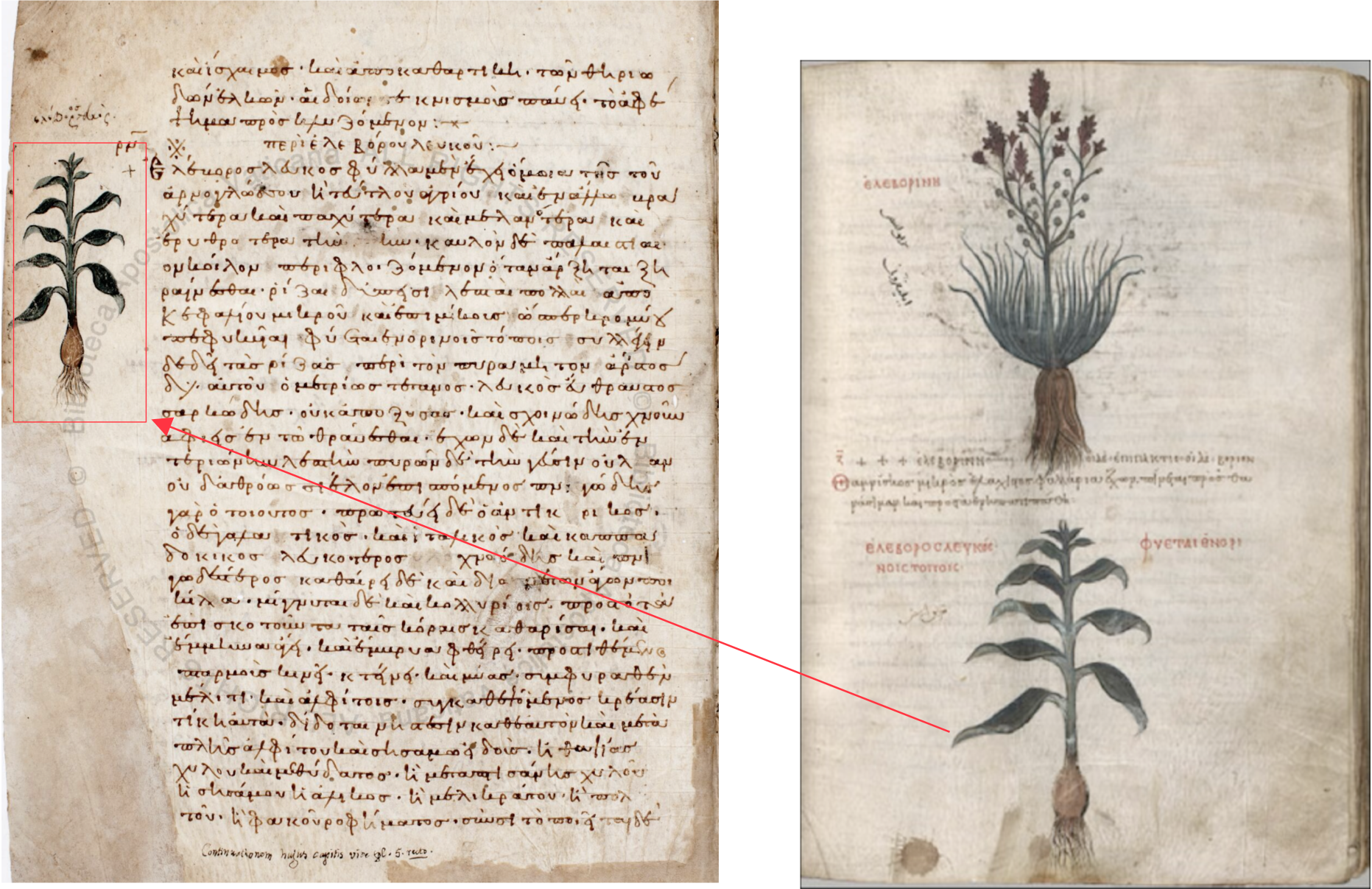
Manuscript Vatican City, Vatican Library, graecus 284, f. 2v
ἐλέβορος λευκός [sic] White Hellebore (Veratrum album L.)
In this Vatican manuscript copied in Constantinople in the 10th century, the illustration was added in the 14th century by reproducing the illustration of the 10th century manuscript New York, Pierpont Morgan Library, M.652 , f. 45r
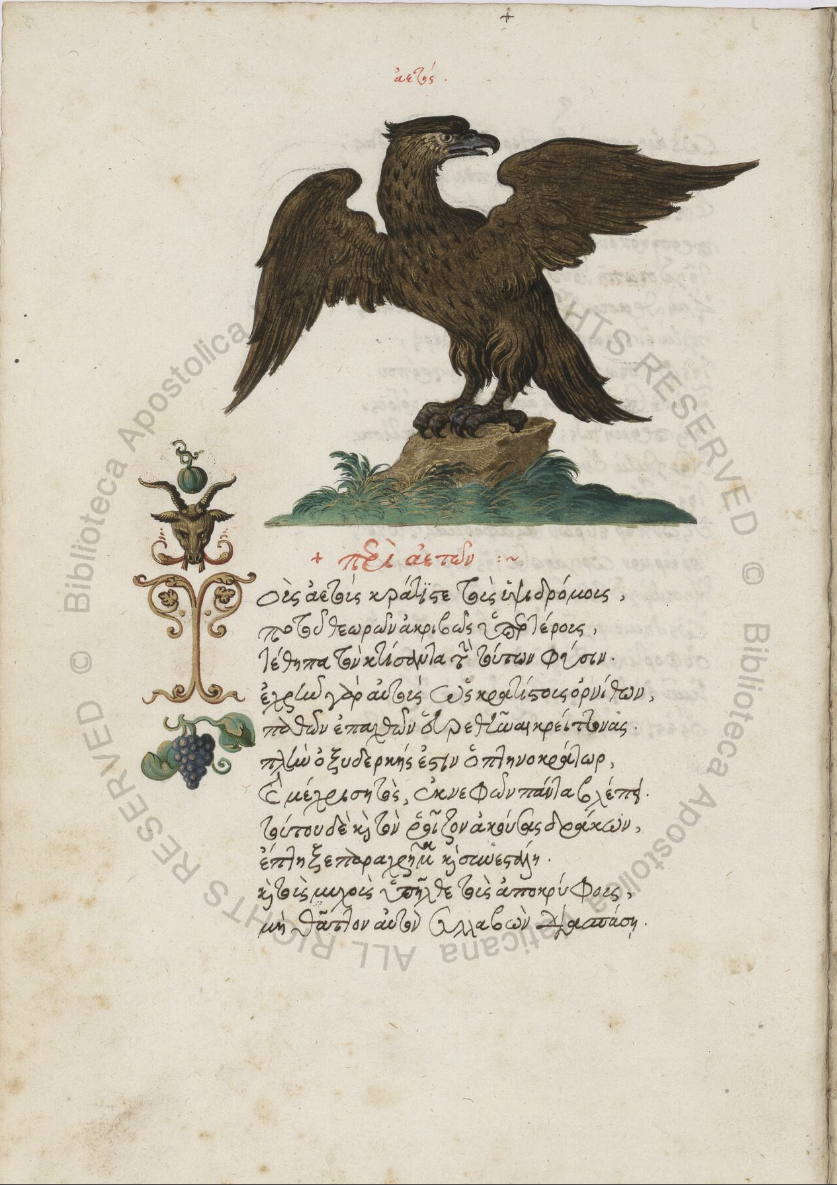
Manuscript Vatican City, Vatican Library, Urbinas graecus 149, f. 2v
Splendid image of the eagle in this 16th-century copy of Manuel Philes, De animalium proprietate, on the animal lore of Antiquity, with the text here in a beautiful calligraphy.
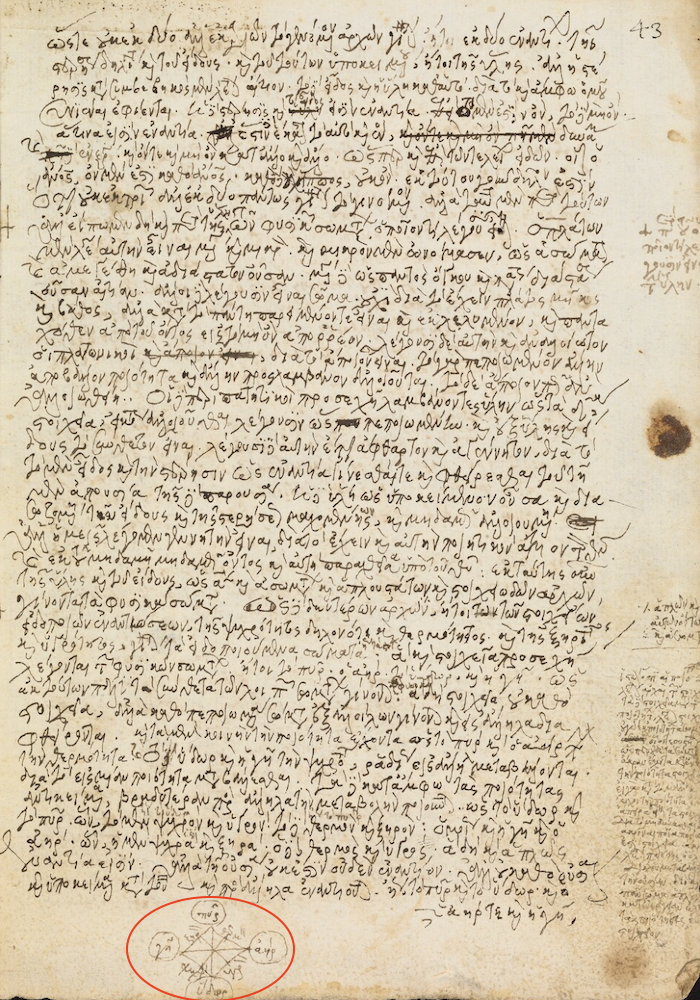
Manuscript Oxford, Bodleian Library, Baroccianus 94, f. 43 r
In a 15th-16thcentury manuscript on De natura hominis by Nemesius, diagrammatic representations of the 4 elements (fire, air, water, earth) with the 4 qualities (dry and hot, humid and cold) and their connections to the elements
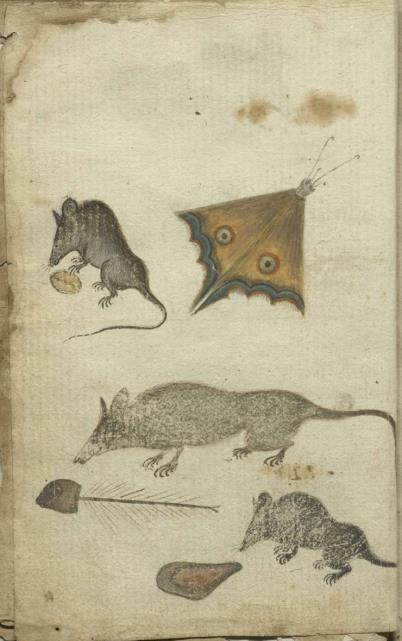
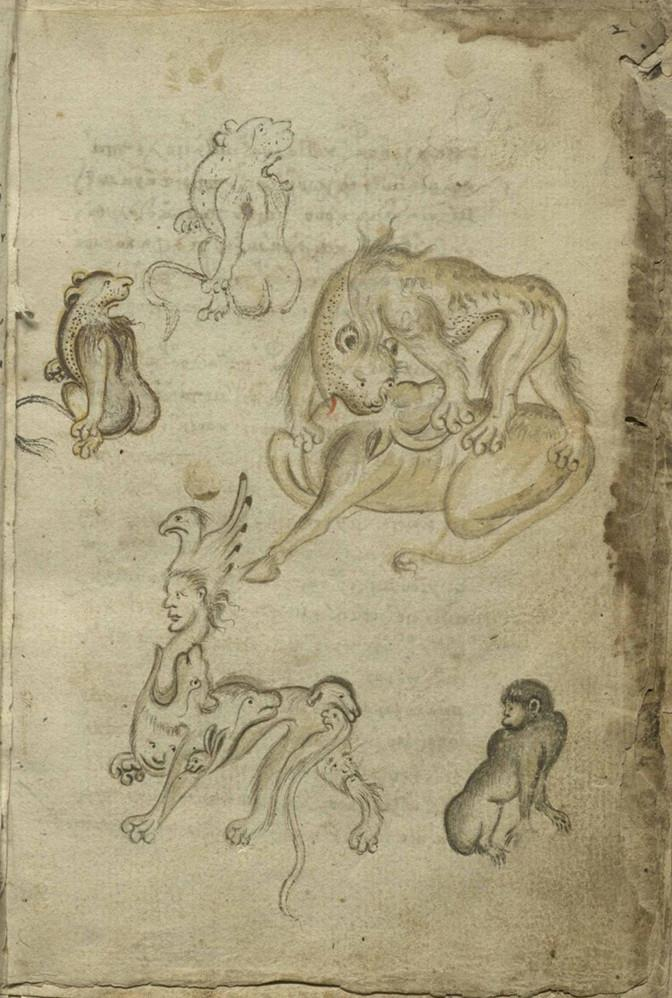
Manuscript San Lorenzo de El Escorial, Library of the Royal Monastery of San Lorenzo de El Escorial, Φ.III.07, ff. 2r and 4v
In a manuscript of Galenus, In Hippocratis Prognostica, and Leo, De hominis natura, produced in Constantinople in the second half of the 14th century, vivid scenes of natural history also including a fantastic chimera (f. 2r), opening a set of folios with naturalistic illustrations (see also f. 4v)