Materia Medica of Cosmetics
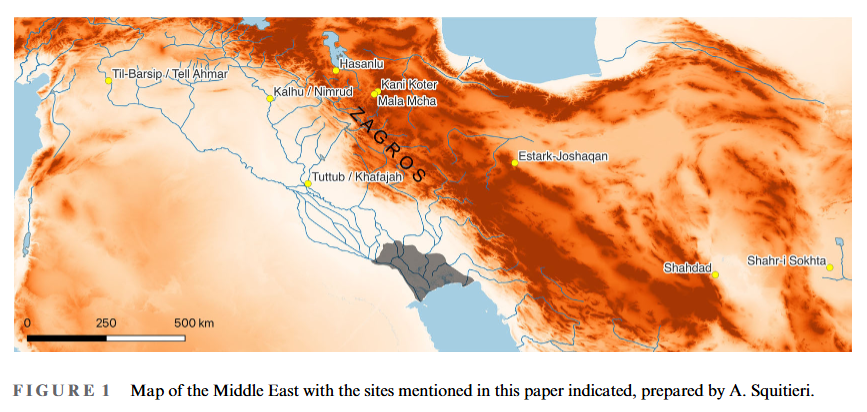
The ancient make-up has long intrigued archaeologists who sought to identify the substances used for the kohl to underline the eyes of women in Antiquity. Research identified organic and inorganic materia medica, often including lead despite its toxicity. A recent multidisciplinary programme reached the conclusion that “the black colouration was most likely obtained by mixing manganese oxides with natural graphite”. Analyzed material came from the Iron Age cemetery of Kani Koter in Northwestern Iran.
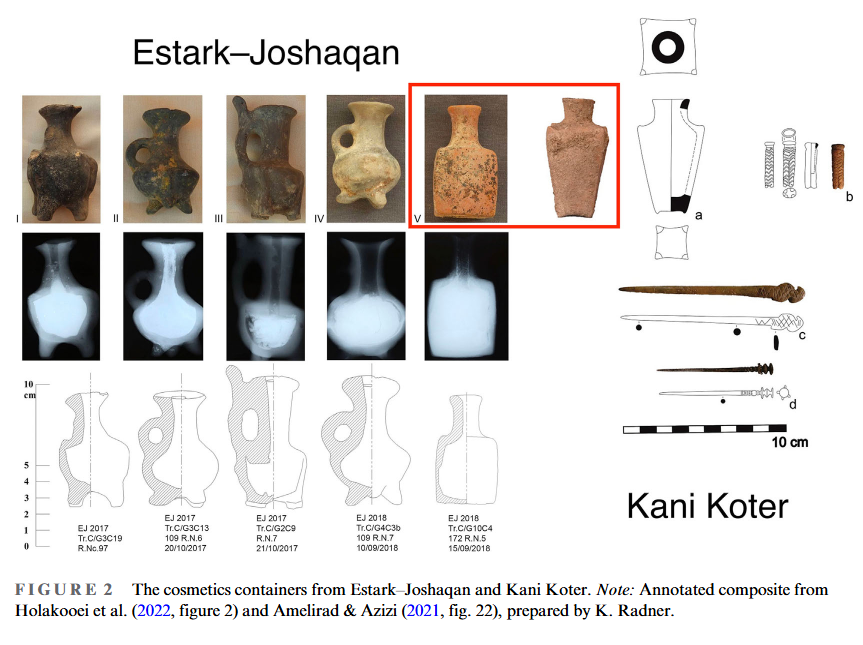
Archaeological material consisted of two “containers … found with their contents intact, and these were only removed when the objects were analysed, exposing, in each case, a black, powdery substance. The containers were therefore interpreted as kohl containers … and the pins as kohl applicators (Figure 2). Only the contents of the larger container were sampled …”.
Amicone, S., Solard, B., Amelirad, S., Azizi, E., Maritan, L., Rageot, M., Berthold, C., & Radner, K. (2025). Eye makeup in Northwestern Iran at the time of the Assyrian Empire: a new kohl recipe based on manganese and graphite from Kani Koter (Iron Age III). Archaeometry, 1–15. [Hyperlink: https://doi.org/10.1111/arcm.13097].
Digital Technology Conference
Intelligence Space. Creativity in Dialogue with Technology [Hyperlink: https://eva-berlin-conference.de/]
A conference by the Brandenburg University of Technology Cottbus-Senftenberg (BTU University) hosted by the Fraunhofer Heinrich-Hertz-Institut (HHI) in Berlin (Germany) from 18 to 20 March 2026.
The 29th Electronic Media & Visual Arts (EVA) Berlin Conference addresses the ongoing changes in culture and digitality. The increasing convergence of digital technologies and artificial intelligence is shaping the development of hybrid experiential spaces, where AI-based mediation formats, immersive XR technologies, and participatory interaction ecologies play central roles. Innovative concepts such as Intelligence Space, Audience Segmentation, and Deep Learning Curation enable data-driven, multi-perspective approaches and hyper-personalized visitor engagement. Standardization and digital archiving are essential for sustainable metadata management, interoperability, and regulatory compliance. Social prescribing is establishing museums as health-promoting environments where cultural participation contributes to psychosocial stabilization. Adaptive work panels, inclusion interfaces, and empathy swarms foster accessibility and collective experiences, while data poetics advances artistic reflection on data-driven processes. In this way, museums are evolving into transdisciplinary hubs of social innovation and integration.
Among the topics and of interest here, digital collection strategies and accessibility, including:
-Open access to cultural heritage collections
-Visualization and exploration of heterogeneous datasets
-Digital infrastructure, standards and AI-driven object analysis
-Virtual exhibitions, immersive digital tours and cultural heritage
To submit proposals with a brief CV (each up to 300 words) for lectures, posters, workshops and exhibitions until 14 July 2025 via the following link: Submit via EasyChair [Hyperlink: https://easychair.org/account2/signin?l=3688472766506968480].